TOUR HIGHLIGHTS
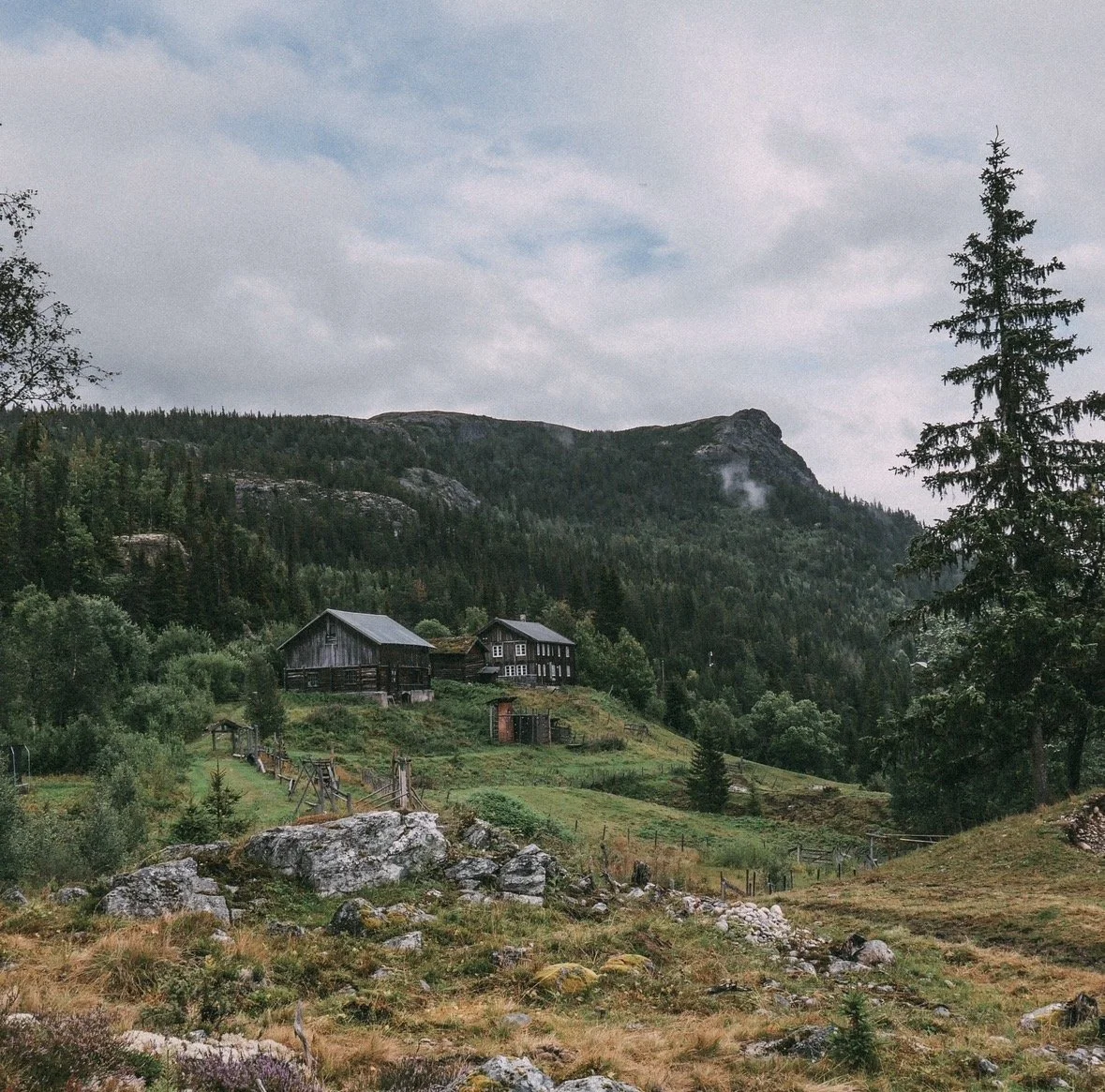
Private dinner at Dalbakken, the Andersons' actual ancestral farmhouse
A guide from the local historical society leading family to specific ancestral farms and parish churches
A working genealogist's research built into the trip from the first afternoon
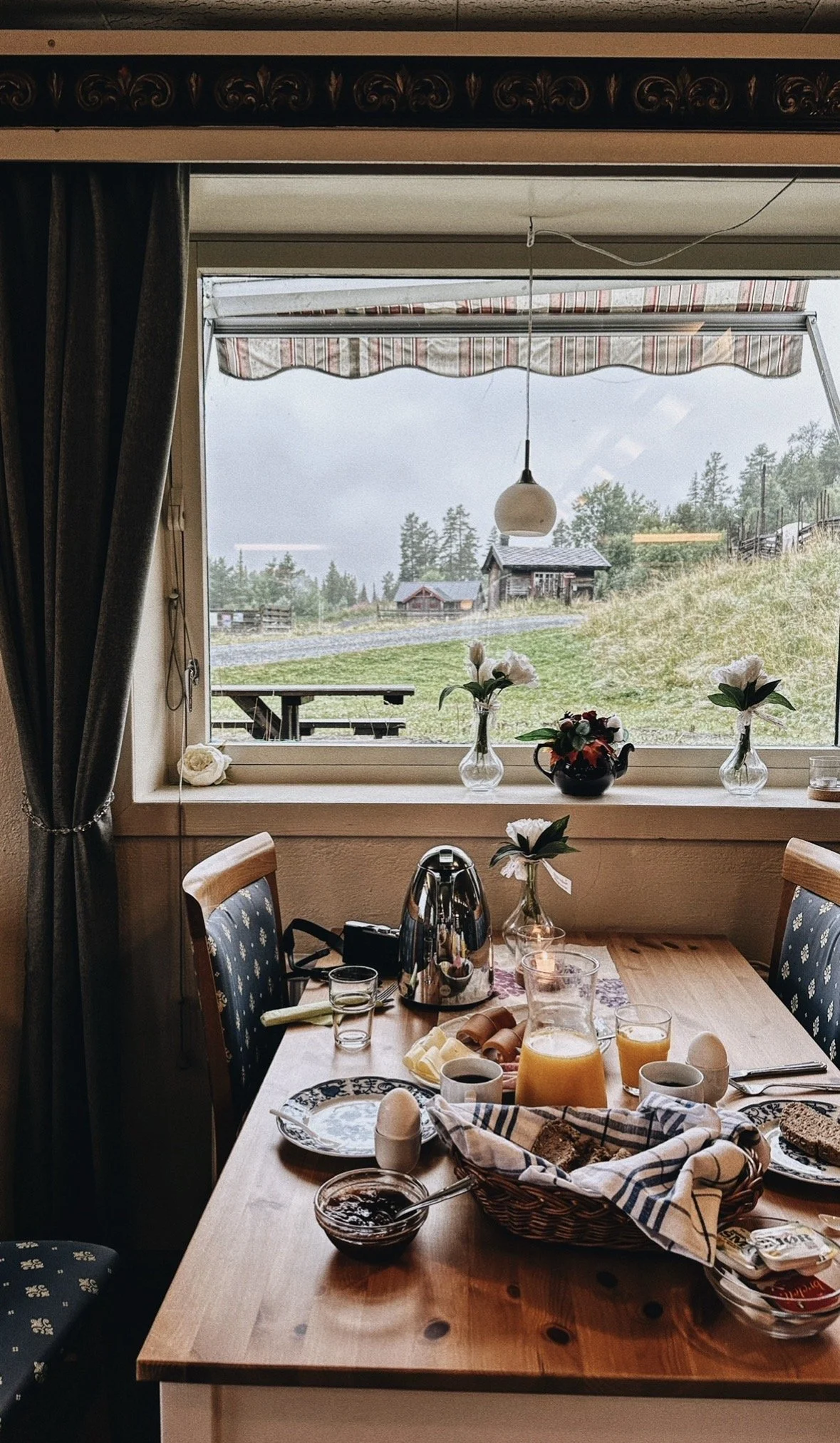
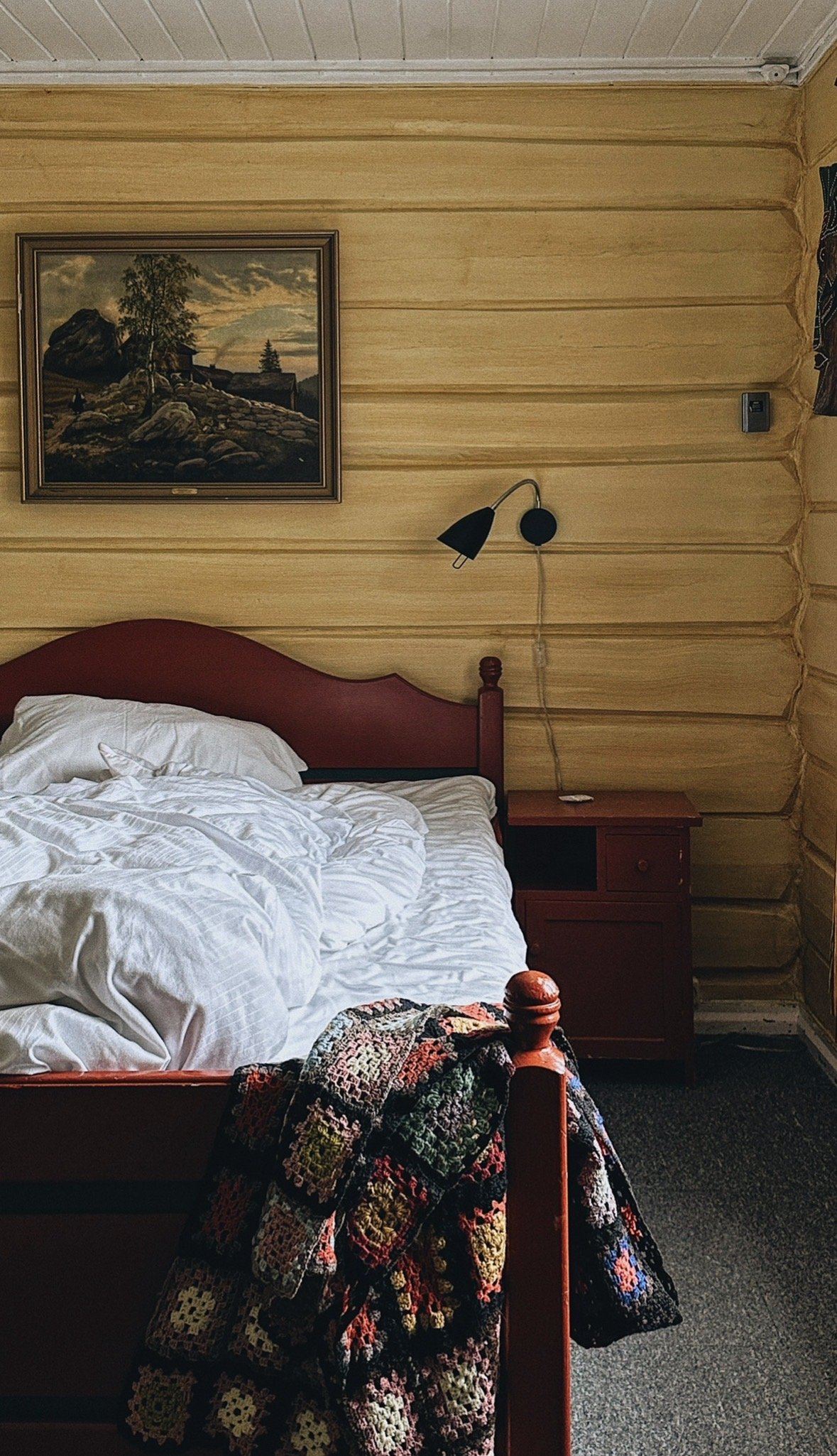
Overnight at Sygard Grytting, a 700-year-old working farm hotel that has hosted travelers since before the Mayflower sailed
Four stave churches, including Borgund, the best preserved of Norway's 28 remaining
Sognefjellsvegen, the highest mountain road in northern Europe
The Flåm Railway, followed by a fjord crossing by express boat to Balestrand
Kviknes Hotel, on the Sognefjord in Balestrand
'
TOUR PRICE $ (per person | double occupancy)
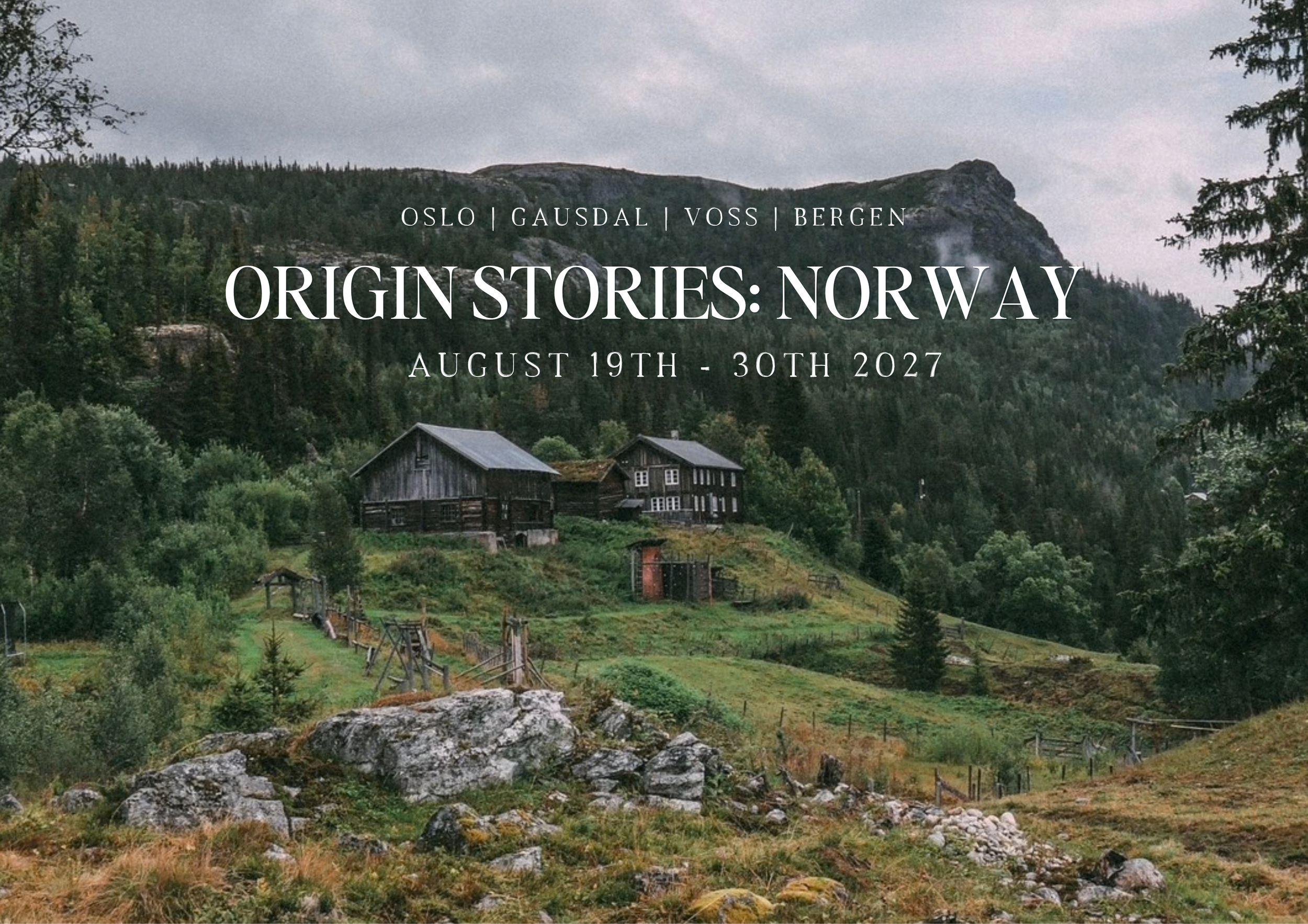
Every family has a version of this story: a grandmother's maiden name nobody could spell, a farm name that turns out to be an actual place, a single year that reshaped everyone who came after it. For the Andersons, that year was 1868, when Hans Christian and Pernille packed a mining valley's worth of a life into whatever a horse cart and a lake boat could carry, and left Espedalen for Minnesota with two teenage children and not much else.
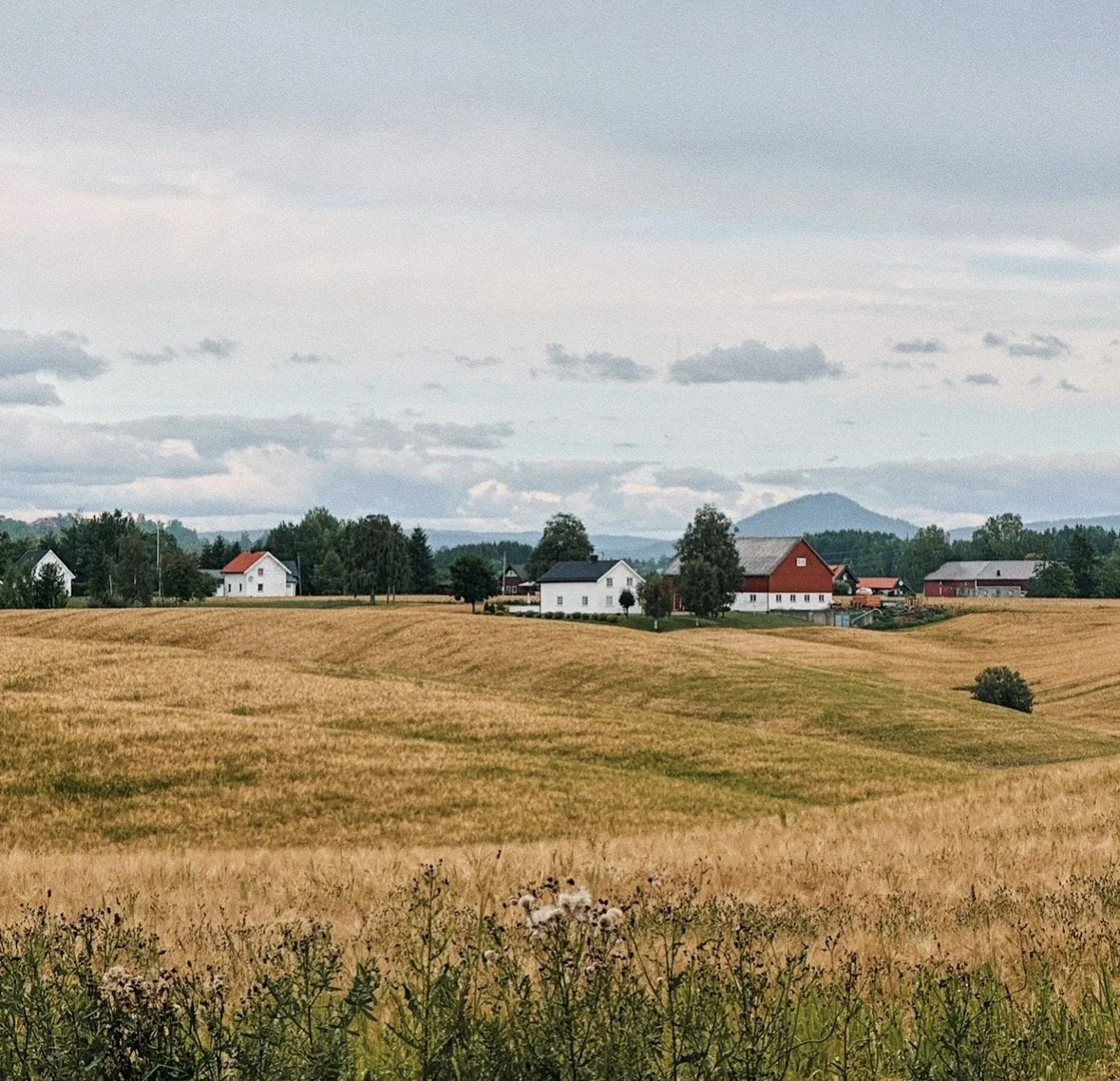
This trip doesn't try to explain that decision so much as it lets you stand inside the story of it. You'll walk the same lakeside cemetery, eat dinner in the farmhouse your ancestors actually lived in, and drive the same valleys the family's letters home were read aloud in, kitchen tables and church halls, each one making the next departure a little easier. Norway doesn't stay in one register the whole way through: there are stave churches and pilgrim farms and mountain passes, but also cider tastings, a fjord village and a funicular ride over a harbor city, because beauty and hardship were never actually separate things for the people who left, or the people who stayed behind.
Twelve days, one small group of connected families, moving at the pace of a place that's still willing to tell you what it remembers.
12 SPOTS

TRIP OVERVIEW
TRIP PRICE: $x per person/double occupancy
WHAT’S INCLUDED
Beautiful, centrally located accommodations double occupancy; $1295.00 Single supplement fee
Most meals (9 Breakfast, 1 Lunch, 5 Dinners)
Sudden Journeys Tour Director
A small, friendly group of 8 people
Ground transportation when using Uber/Taxi.*
Three train journeys, first class tickets when available
All sightseeing, events, and visits as noted in the itinerary
All entrance fees, service charges, and standard taxes
Local guides and restaurant gratuities
Special dinner and welcome drinks
Custom-designed gifts for your travels
Fine print: You are responsible for the cost of your drinks and free-time sightseeing. See our Tour Conditions for important details regarding everything listed above. When using the tube/bus you will be paying for this as you must pay with your own contactless form of payment.
Arrival Airport: OSL Oslo
Departure Airport: Bergen or Oslo
Note: The itinerary is descriptive, not definitive, and is subject to change. There also may be modifications due to weather, restoration works taking place are historic sites, and availability of local activities and guides.
“The tour was extremely well organized and every detail was considered. I felt so comfortable and well cared for as we all enjoyed this beautiful part of the world.”
ACCOMMODATIONS
TWO NIGHTS IN OSLO
A marvel of Belle Ép
THREE NIGHTS IN GAUSDAL
Blending Parisian flair with Viennese soul, this hotel is housed in a historic building on the city's
TWO NIGHTS IN VOSS
Situated within a quiet corner of the Old Town, your Prague hotel is moody, modern, and laced with historical elements. With custom-designed interiors and a warm, bookish charm, it’s a retreat for the curious and contemplative. Just outside its doors, Prague’s cobbled passages await you.
ONE NIGHT IN BALESTRAND
A 1930s former trading office turned creative haven, your Amsterdam hotel overlooks the canal in De Negen Straatjes. With a rooftop pool, art-filled lounges, and layered textures throughout, it’s a place where inspiration and intimacy coexist. Cozy up by the fires in the evening with views of the glittering canals below. Expect thoughtful design, soulful food, and a quiet kind of luxury perfect for a journey’s final chapter.


TWO NIGHTS IN BERGEN

TOUR HOST: KYLE ANDERSON CAMPBELL
FOUNDER OF SUDDEN JOURNEYS
Kyle has spent more than twenty-five years leading small groups through Europe and beyond. But this particular trip started as a family trip, not a tour. In August 2023, Kyle and her father drove into the Espedalen valley together, guided by a local historian, looking for the farm their family had left a hundred and fifty-five years earlier. They found it. This tour is Kyle bringing other families the same road.
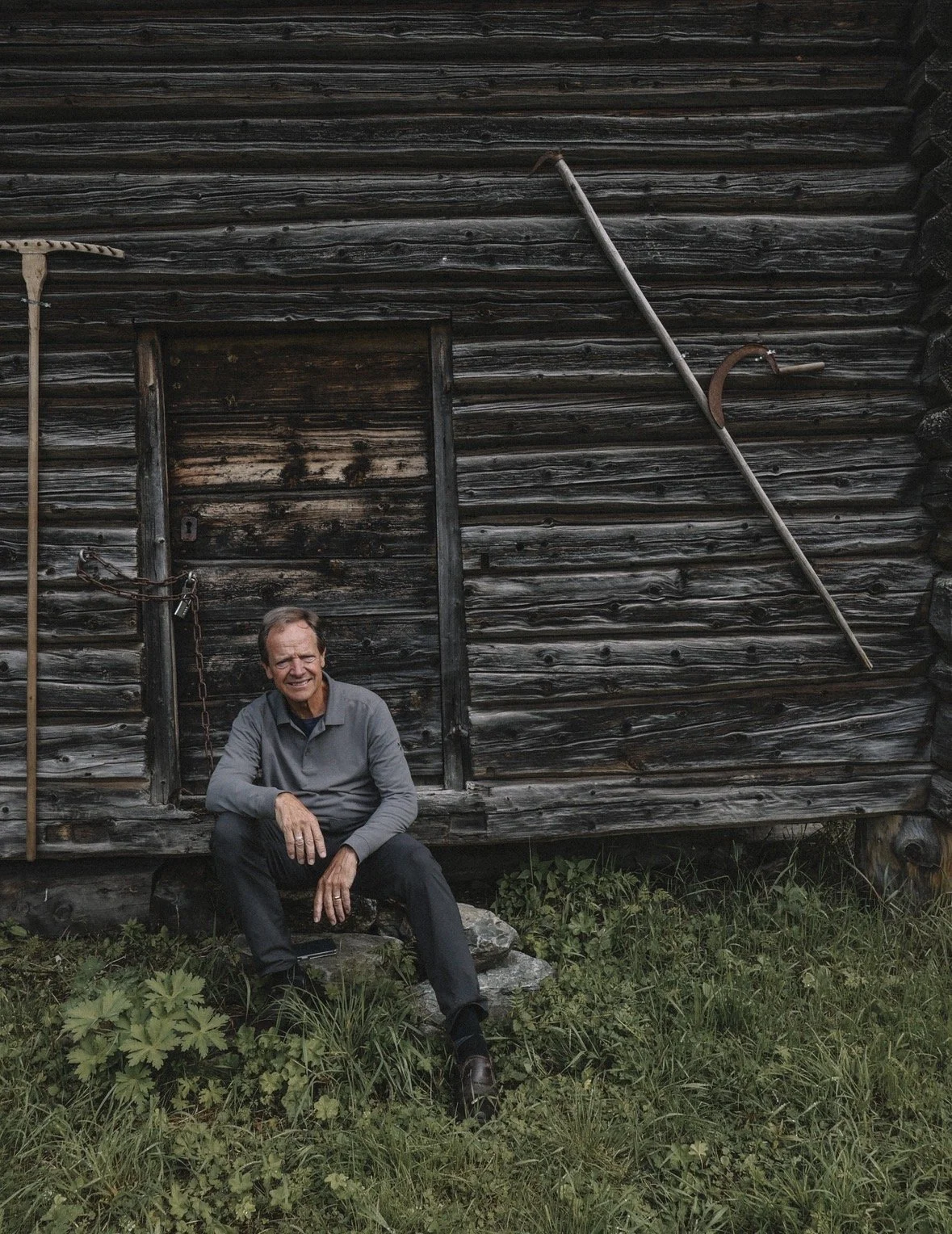
TOUR HOST: PAUL ANDERSON
FAMILY HISTORIAN
The Andersons in Norway
In August 2023, Paul and Kyle drove north out of Oslo, through Lillehammer, into a mining valley called Espedalen, looking for a farm they'd only ever seen in genealogy records. A local historian met them on the road and spent two days walking them through it.
The story starts with Hans Christian Andersen, born in Oslo in 1827, who came to Espedalen as a young man chasing work. An English company had found nickel in the valley in 1847, and by the time Hans arrived, the boom had pulled in workers from across Norway, building a town of some fifteen hundred people where, a few years earlier, there had been almost no one. Hans met Pernille Jensdatter, whose family lived at Dalbakken, a farm whose name simply means the slope in the valley, and they married in 1851. Their son Henry Alfred was born in 1855, their daughter Marie Julie Bernhardine a few years after.
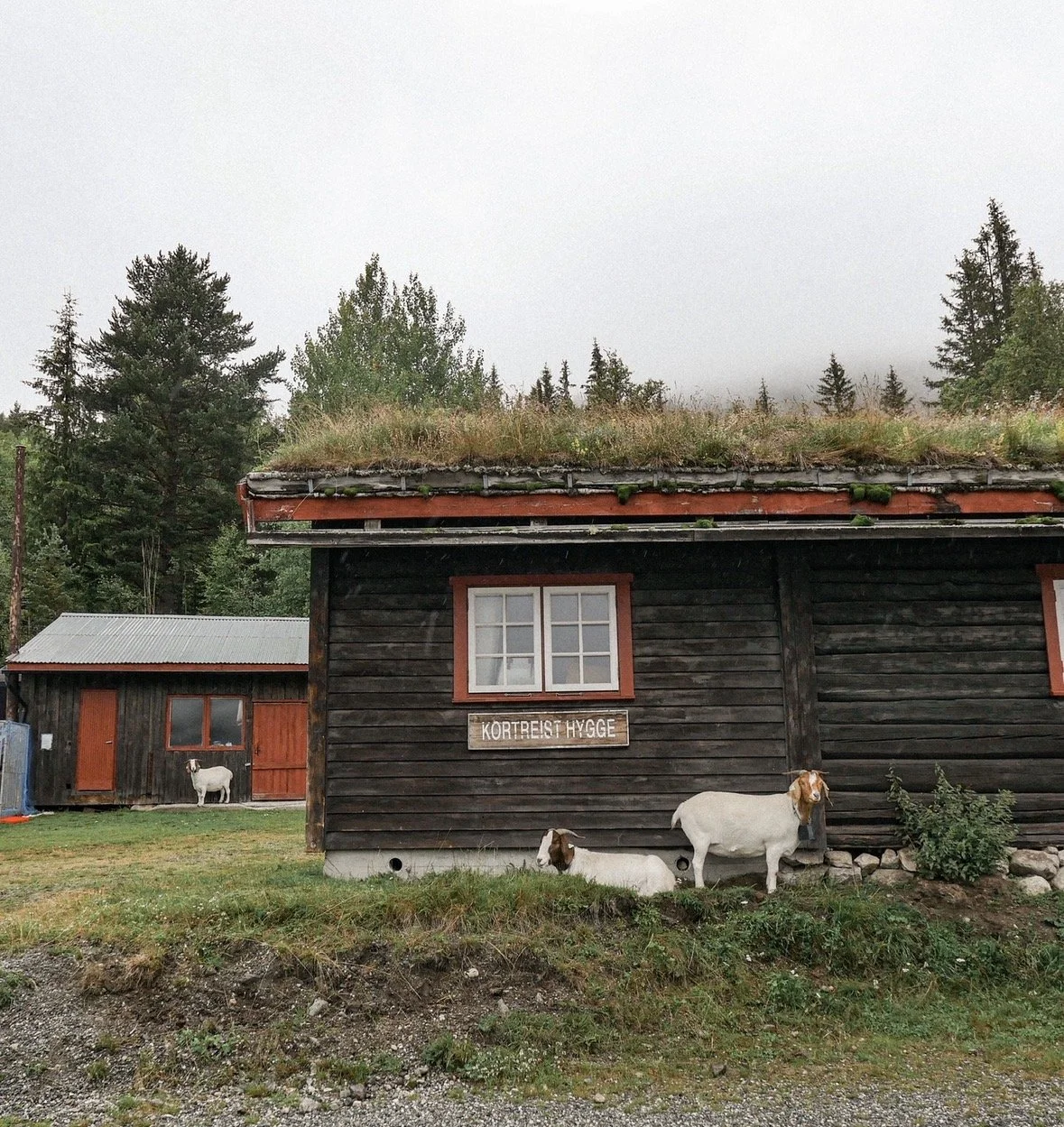
The mines closed in 1857. The town, built fast, came down just as fast, and Hans and Pernille moved back to Dalbakken, in with Pernille's sister and her husband, and started over as farmers. It was a good place to live if you didn't need much from the outside world: hay, grain, and potatoes in the fields, cows and goats and sheep on the mountainside, fish from the lake, game in the woods. It was also a very long way from a doctor or a shop. A relative who grew up on that same farm decades later walked seven miles each way to school.
In 1868, Hans Christian and Pernille packed up everything the family owned and left. Horse cart, lake boat, dirt road, all the way to Oslo, and then a ship. What pulled them, more than anything, seems to have been letters, the ones already arriving back from friends and relatives who'd made the same trip, read aloud in kitchens and church halls, each one making the decision easier for the next family to follow. Henry Alfred was thirteen when the family reached Minnesota. He died in Minneapolis in 1917. His mother Pernille died the same year, by the record, one day apart from her son.
Marie Julie married a Norwegian-American reverend named Anders Olsen Megrund, likely from a farm just up the road from Dalbakken, a detail the family is still confirming. What the historical society's records have already turned up is a distant Norwegian relative neither Paul or Kyle knew existed, and a research thread that's still being pulled on both sides of the Atlantic.
The mining town is gone now. What's left is some stone foundations and a small cemetery on an island in the lake, reachable by a wooden footbridge, where most of Espedalen's original families are buried. Fewer than thirty people live in the valley today.
Before Sunrise came out thirty years ago and I have never stopped wanting to live inside its atmosphere. So I built this journey around that feeling. Read an essay I wrote on the film that shaped this tour, and why winter Europe by rail is the grown-up answer to an old longing.
DAY ONE AUG 19TH (Arrival Day)
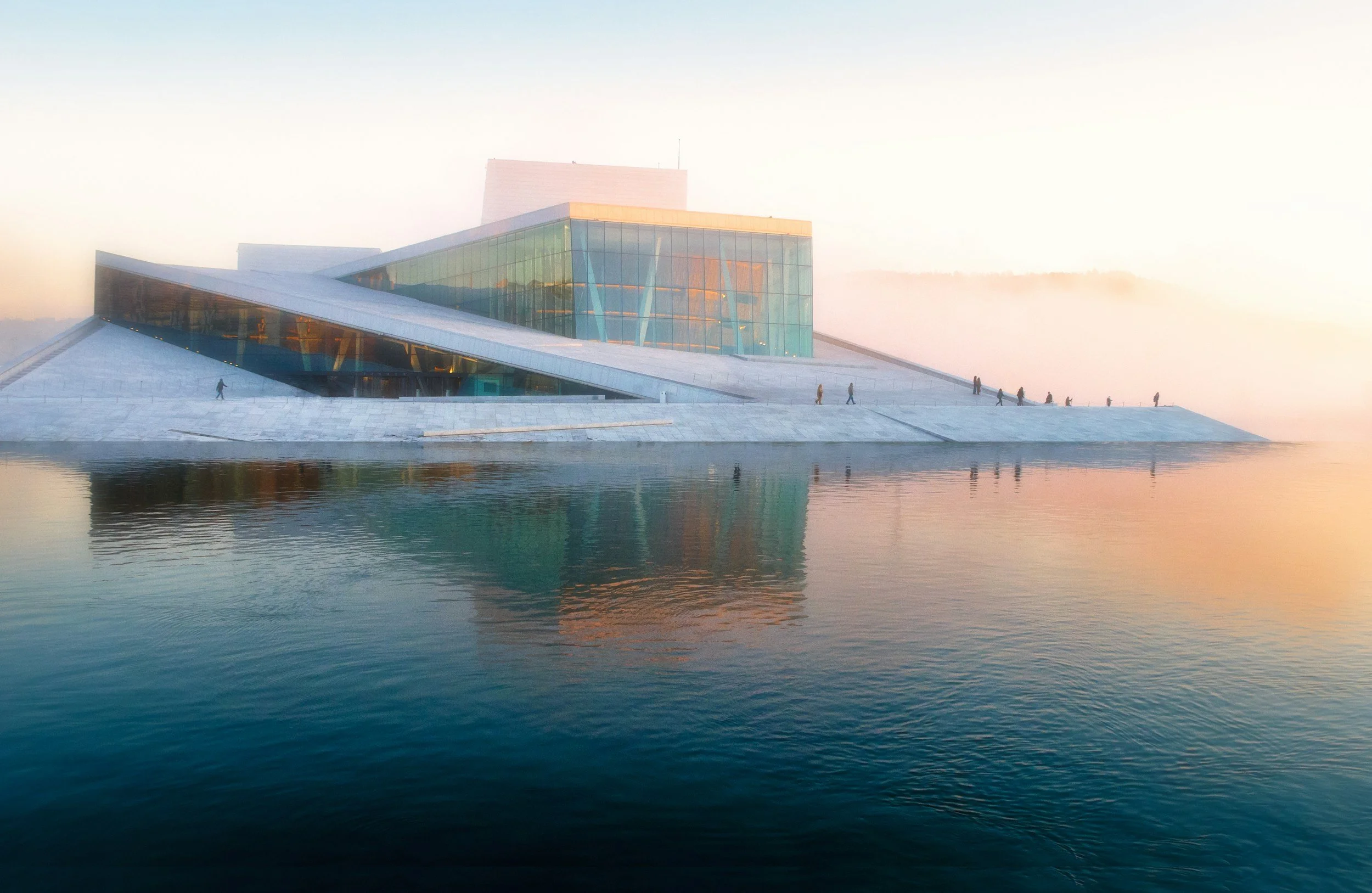
Arrive in Oslo and let the jet lag do what it does, there's no rush today. A guided tour through the city gives you your first sense of scale, wide streets, harbor light, a country that has always looked outward. In the evening, the wider Anderson network gathers for the first time in a private room, candlelight, a long table, the first of many nights where family stories get told out loud instead of typed into a search box.
Coach or guided walking tour of Oslo
Welcome dinner in a private dining room
LIGHT WALKING, 2–3 MILES · SLEEP IN OSLO
DAY TWO AUG 20TH | OSLO
Spend the morning at the Norsk Folkemuseum, more than 150 buildings gathered from across the country, farmhouses, storehouses, a stave church lifted whole from the village of Gol in the 1880s. It's a strange, moving thing to walk through the material world your ancestors actually lived in, low doorways, turf roofs, the particular quiet of a building built to survive a winter. The afternoon is yours: wander, rest, find a coffee. In the evening, the group regathers in one of Oslo's older neighborhoods, at minimum for a drink, ideally for dinner together, the kind of evening where you start learning which cousin married which cousin.
Norsk Folkemuseum, including the 13th-century Gol stave church
Free afternoon to explore at your own pace
Group dinner, or drinks, in a historic neighborhood
LIGHT WALKING, 3–4 MILES · SLEEP IN OSLO
DAY THREE AUG 21ST Drive North to Ringebu
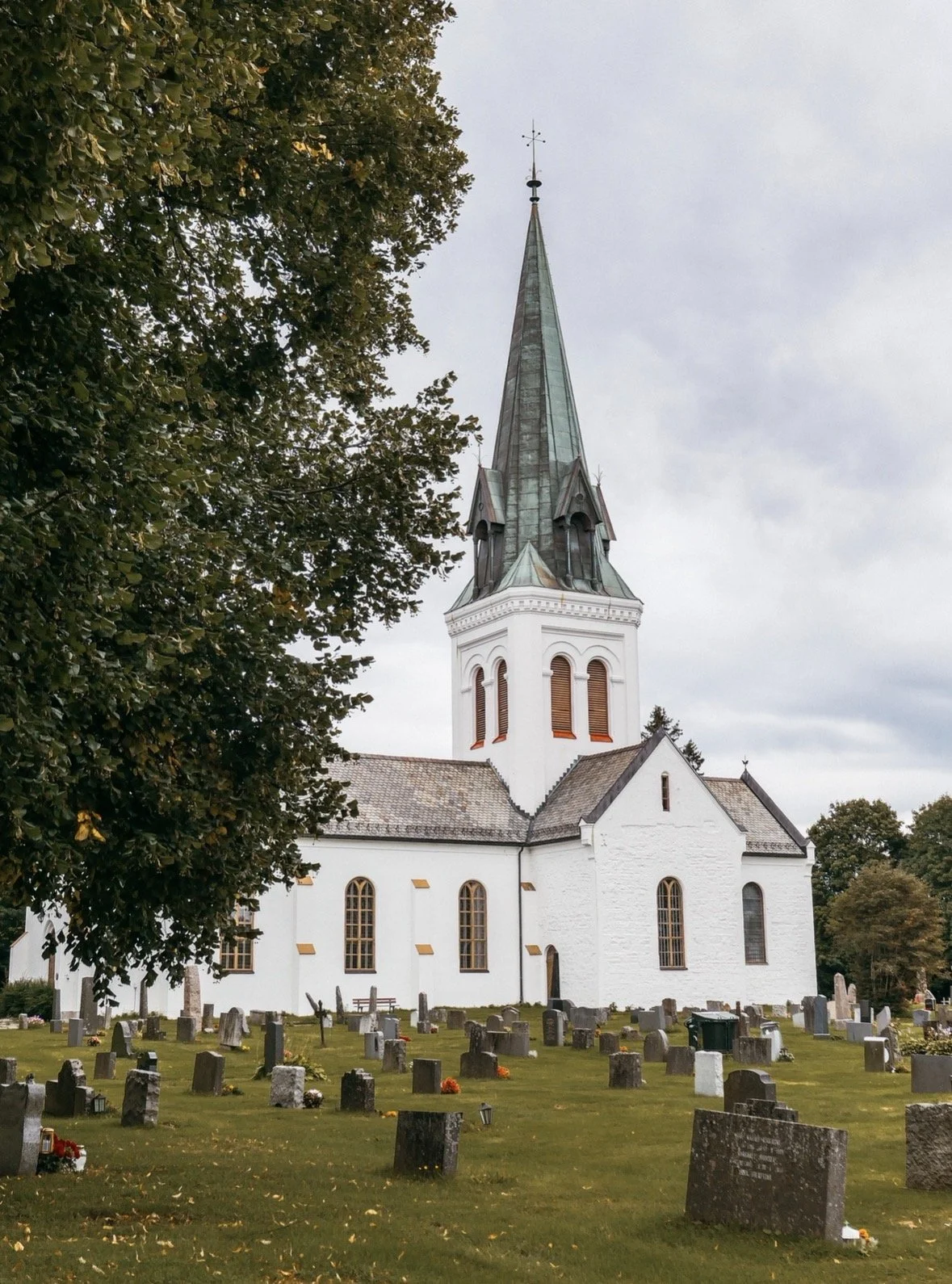
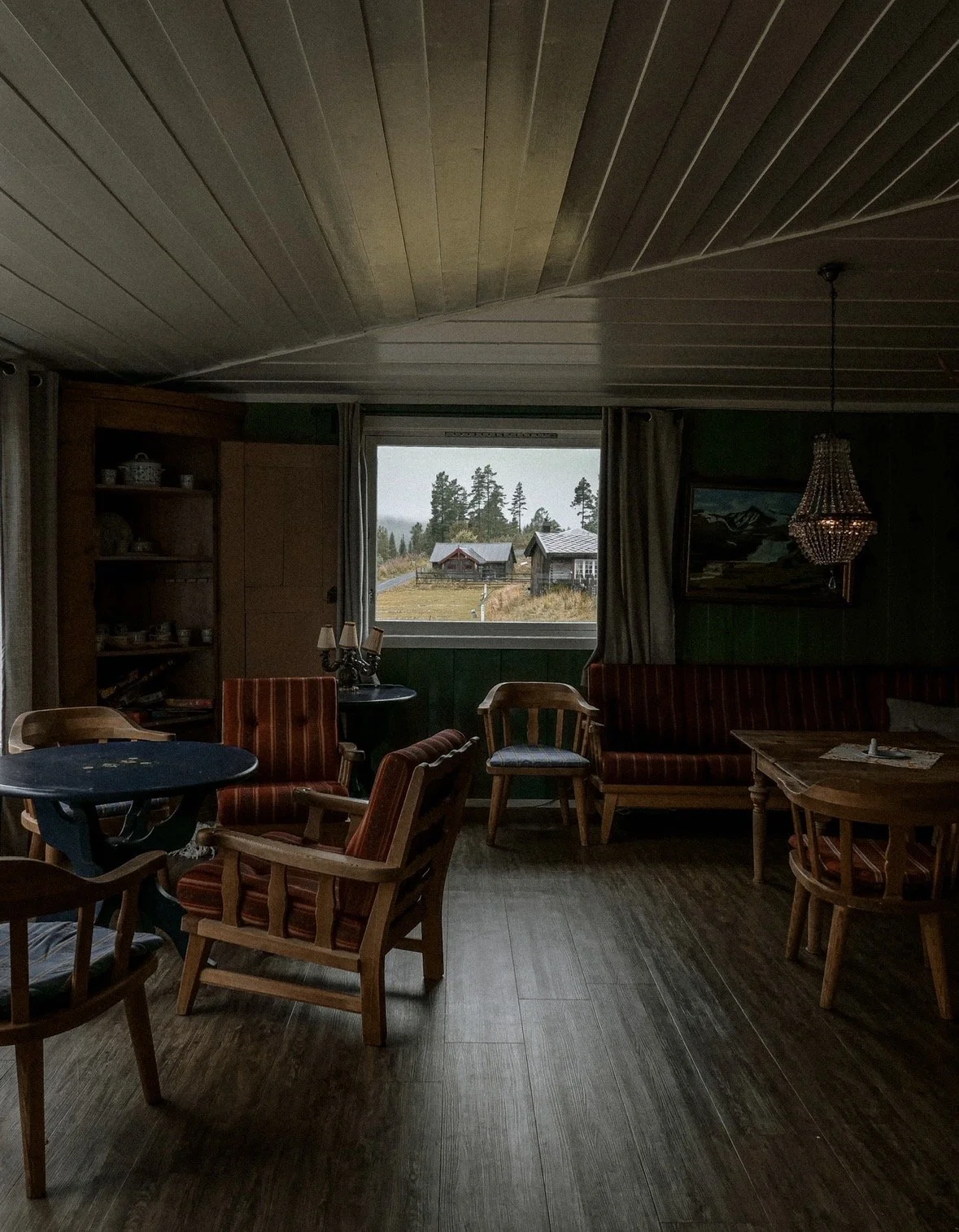
Leave Oslo behind and drive north into the Mjøsa lake country. In Eidsvoll, stop at the church before lunch at Loftet, a working farm shop and café. Just up the road, the Norwegian Emigrant Museum holds the country's largest archive devoted to people who did exactly what your family did, packed a farmhouse into a handful of trunks and left. Ask about the America letters, the ones read aloud in kitchens and churches that convinced whole villages to follow. By evening you're deep in Gudbrandsdalen, at Ringebu's stave church, standing since 1220. Dinner and the night are at Sygard Grytting, a working farm hotel that has hosted travelers, in some of the same buildings, for seven hundred years, three centuries before the Mayflower.
Eidsvoll Kirke and lunch at Loftet Gardsbutikk
Norwegian Emigrant Museum, private guided visit
Ringebu Stave Church
Dinner and overnight at 700-year-old Sygard Grytting Farm Hotel
LIGHT WALKING, 2–3 MILES · SLEEP IN GAUSDAL
DAY FOUR AUG 22ND | GAUSDAL
This is the day the research stops being paper. A guide from the local historical society, working from the same records and correspondence that built this trip, leads each family to their own farms and churches, the ground their ancestors actually worked. For the Andersons, that means the mining valley of Espedalen, once home to 1,500 people drawn north by a nickel strike in 1847, now down to a scattering of summer cottages around a lake. Walk the old mine road and the small cemetery on the island, then the outbuildings of the homestead. In the evening, dinner at Dalbakken itself, the actual farm where Hans Christian and Pernille raised two children before the family packed up everything they owned and left for Minnesota in 1868. The current owners still live there. Depending on the day, you may meet them.
Guided visit to family's specific ancestral farms and parish churches
The Espedalen mining valley and its lakeside cemetery
Svatsum Kirke
Dinner at Dalbakken, the Andersons' actual ancestral farmhouse
MODERATE WALKING, 3–5 MILES, SOME UNEVEN GROUND · SLEEP IN GAUSDAL
DAY FIVE AUG 23RD| GAUSDAL
After yesterday, today is deliberately unplanned, except for one thing we're keeping to ourselves until the morning arrives. The afternoon is yours entirely: walk the valley, do nothing, write down what you saw yesterday before it settles into memory instead of detail. In the evening, dinner together somewhere unmistakably local, and if the right musician is free, a Hardanger fiddle, the instrument that would have played at every wedding your ancestors ever attended here.
A surprise morning, planned just for this group
A fully open afternoon
Dinner together, local food and, hopefully, live Hardanger fiddle
OPEN DAY. SLEEP IN GAUSDAL
DAY SIX AUG 24TH | GAUSDAL TO VOSS
Today is the long, spectacular one. Coffee and a bakery stop in Lom, beside its own stave church, before the road climbs onto the Sognefjellsvegen. This is the highest mountain pass in northern Europe, glaciers close enough to feel the cold coming off them. The route drops through Tindevegen toward the fjord, then climbs again over the Snow Road, Aurlandsfjellet, with a stop at Stegastein, a viewing platform that hangs out over Aurlandsfjord. By evening, one more stave church, Borgund, the best preserved of Norway's 28 remaining, before the road finally drops into Voss.
Lom Stave Church and a bakery stop
Sognefjellsvegen, the highest mountain road in northern Europe
Snow Road and the Stegastein viewpoint
Borgund Stave Church
LIGHT WALKING, LONG DRIVING DAY · SLEEP IN VOSS
DAY SEVEN AUG 25TH | HARDANGER
A slower day, out to Hardanger, Norway's orchard country, apple and cherry trees running right down to the fjord. Lunch at Yppal Mat og Drykk, then Fjord Farm, where you'll get your hands on the same cheese-making and cooking your ancestors would have done out of necessity, lapskaus simmering, a folk concert in a restored barn if the timing's right. A stop at a Hardanger cider producer rounds out the afternoon before you're back in Voss for a relaxed evening together.
Lunch at Yppal Mat og Drykk
Fjord Farm, hands-on cheese and cooking
Hardanger cider tasting
Dinner together, back in Voss
LIGHT WALKING · SLEEP IN VOSS
DAY EIGHT AUG 26TH | BALESTRAND
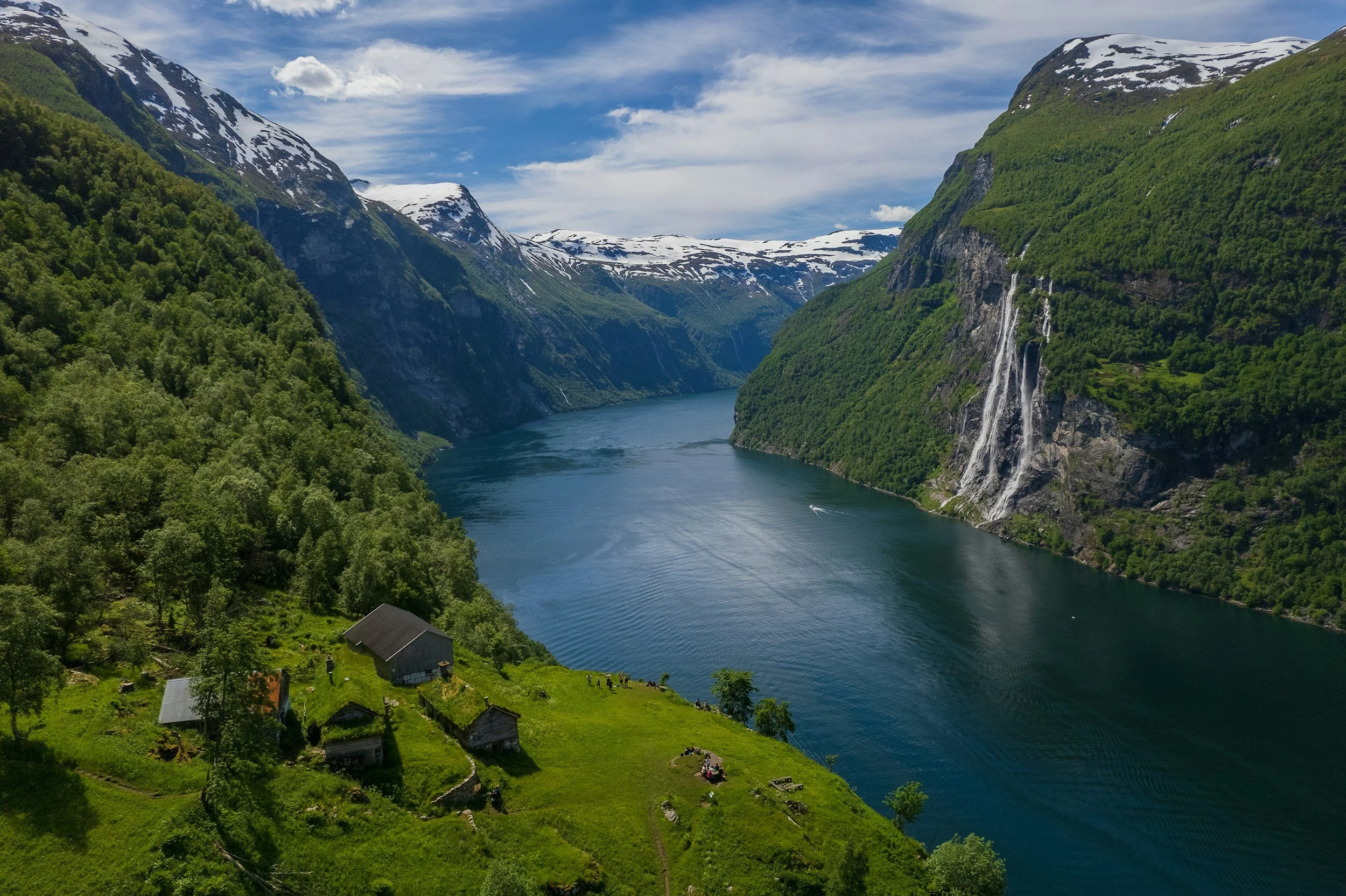
Transfer up to Myrdal and ride the Flåm Railway down, one of the steepest railway lines in the world, waterfalls close enough to feel the spray through an open window. In Flåm, step straight off the train and onto the Norled express boat, which carries you the rest of the way down the Aurlandsfjord and out onto the wider Sognefjord toward Balestrand. This is the day on the water, mountains straight up out of the sea on both sides, and by evening you're checking into Kviknes Hotel, a place that has to be seen to be believed.
The Flåm Railway
Norled express boat across Aurlandsfjord and Sognefjord
Arrival at Kviknes Hotel, Balestrand
LIGHT WALKING · SLEEP AT KVIKNES HOTEL, BALESTRAND
DAY NINE JAN 27TH | BALESTRAND
After eight days tracing hardship, a day about beauty for its own sake. Stroll or cycle to the Cider House for a tasting and a long tapas lunch, then to St. Olav's Church, an English widow's tribute to her Norwegian husband, later claimed as one of the real-world villages behind Disney's Frozen. If you want it, a short hike climbs into the hills above the village for the same view that pulled painters here for over a century. Dinner together closes the day.
Cider House tasting and tapas lunch
St. Olav's Church
Optional hike into the hills above Balestrand
Dinner together
LIGHT TO MODERATE WALKING, HIKE OPTIONAL · SLEEP AT KVIKNES HOTEL, BALESTRAND
DAY TEN AUG 28TH | Balestrand to Bergen
Rejoin the boat for the final stretch of the crossing, Sognefjord widening out until it delivers you straight into Bergen, docking at Strandkai in the middle of the city. Once you're settled, the Fløibanen funicular climbs to the top of Mount Fløyen for the whole harbor laid out below, and there's time for a walk through town before evening. Drinks at Børs Hotel Bar, then dinner at Enhjørningen, dark wood and candlelight, one of Bergen's oldest seafood restaurants.
Boat crossing into Bergen, arriving at Strandkai
Fløibanen funicular to Mount Fløyen
Drinks at Børs Hotel Bar
Dinner at Enhjørningen
MODERATE WALKING, SOME HILLS · SLEEP IN BERGEN
DAY TEN AUG 29TH | BERGEN
A slower morning at Bryggen, the old Hanseatic wharf, crooked wooden buildings standing since the 1300s, and the Hanseatic Museum inside one of them. Bergen was one of the country's major departure ports, which means a meaningful share of the emigrants who left Norway for good would have passed through exactly these docks. The afternoon is free. In the evening, the group's last dinner together, a toast to twelve days spent moving through the same landscape your family moved through, in the opposite direction.
Bryggen and the Hanseatic Museum
Free afternoon
Farewell family feast
LIGHT TO MODERATE WALKING · SLEEP IN BERGEN
MORE TOUR INFORMATION
-
We design for depth, not breadth. Fewer cities, slower days, richer moments. Our journeys are intimate, creative, and shaped by storytelling, sensory memory, and reflection.
-
We’ll provide guidance on the best ways to arrive to Budapest.
-
Boutique properties with strong character — from a Parisian-Viennese hotel in Vienna to a literary-inspired stay in Prague. All rooms are double occupancy with private baths.
-
Yes. All train travel between cities — Budapest to Vienna, Vienna to Prague, and Prague to Amsterdam — is included in your tour cost. We travel in comfort, with assigned seats and ample space to read, journal, or gaze out the window.
-
We travel in first class or premium standard, depending on the route. Expect quiet cars, large windows, onboard service, and space for your luggage.
-
Yes. We can accommodate most allergies and dietary restrictions — just let us know in advance.
-
Breakfast is included each day. Most dinners are shared as a group, but we also make space for you to explore on your own. Lunches are on your own. We’ll provide detailed dining recommendations.
-
We recommend packing light with one medium suitcase and a day bag or backpack. We'll be navigating cities on foot and via train, so portability is key.
-
Think stylish yet comfortable: walking shoes, layers for changing weather, and a few smart-casual outfits for dinners and evenings out. No formalwear required… unless you want to go face!
Note winter time can be cold and rainy. Make sure to have warm clothes!
-
Yes, private rooms are available for solo travelers at an additional cost of $895.00. Shared-room options are only for those who know each other.
-
Yes. Each day includes moments for solitude or self-guided exploration. Our goal is balance: shared experiences with plenty of room to breathe.
-
Bring layers: a warm coat, scarf, gloves, good walking shoes or boots, and a small umbrella. The journey blends cozy interiors and atmospheric outdoor strolls, so comfort and warmth are key.
-
Expect winter weather — crisp air, possible snow, and magical light. We include ample café stops and pauses to warm up. Think: candlelight, hot drinks, and layered clothing.
-
Bring a journal if you keep one, a bathing suit for thermal baths, and perhaps a book you’ve been saving. We’ll provide poetic maps and storytelling prompts.
-
Not at all. English is widely spoken in the places we visit, and we handle all logistics.
UK TRAVEL INSPIRATION